819 Conversations
A Year-End Essay on Return, Continuity, and Shared Possibility.
Most programs–economic development and otherwise–are built to capture moments. Applications entered. Cohorts completed. Surveys filled out and filed away. They’re good at measuring arrival and exit, and often little less. Lo, the mediocrity of metrics.
What these programs rarely get to see—because their structure disallows it—is return. When people choose to come back, week after week, year after year, once novelty fades.
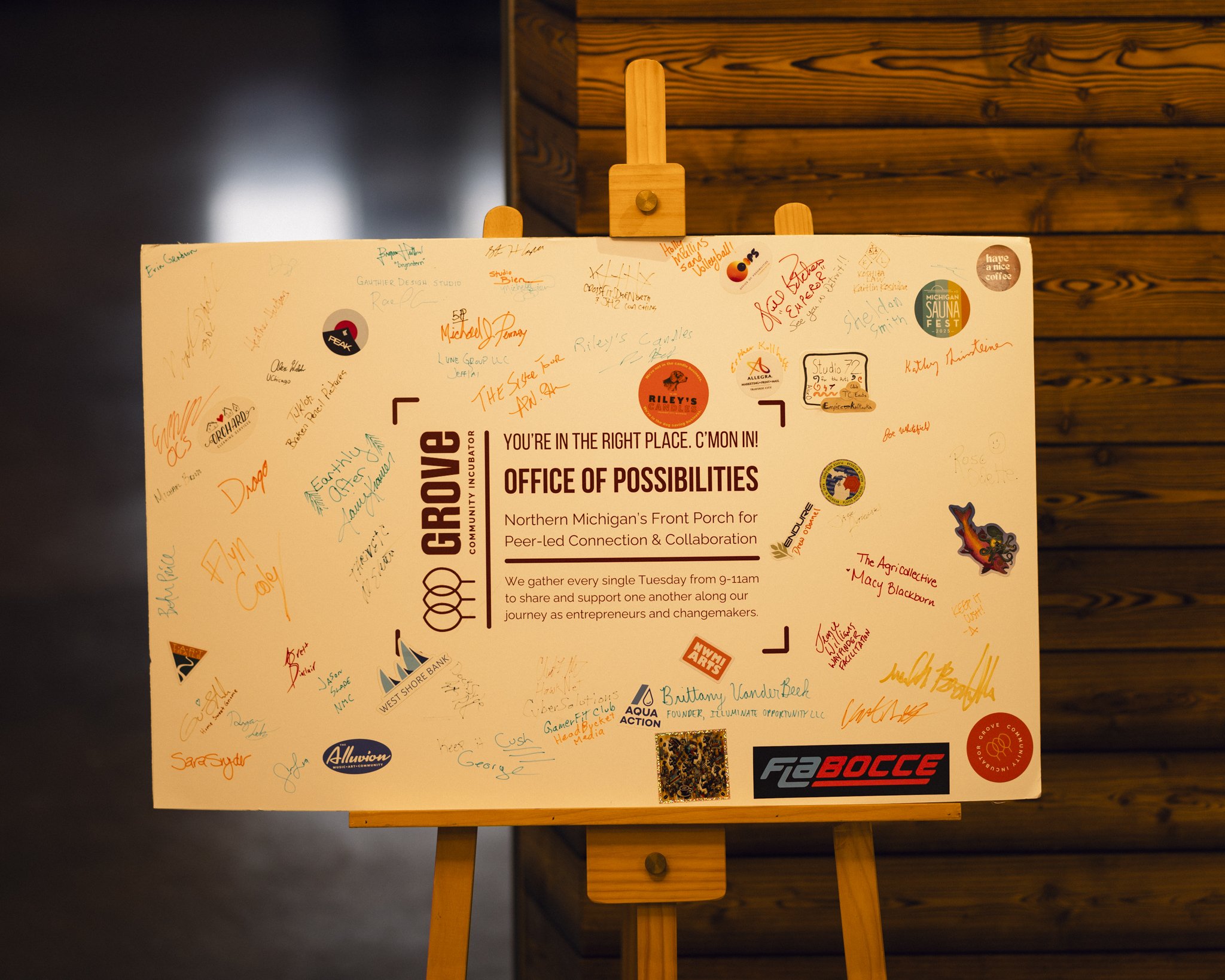
Our Office of Possibilities is a weekly, open peer-support gathering for entrepreneurs and changemakers. There is no application, no sign-in sheet, not even a defined outcome. People arrive on their time, with half-formed ideas, stalled projects, and questions they might not even know yet how to ask. They introduce themselves briefly, then disperse into peer-led conversations. Then they leave once they have what they need. Maybe for the day, maybe forever.
We’ve been leading this “un-program” since the beginning of 2023. And though we don’t take formal attendance (frankly it’s weird to track adults), we’ve always paid attention to the rhythm of the room.
“We’ve been leading this “un-program” since the beginning of 2023. And we’ve always paid attention to the rhythm of the room. “
At the urging of other trusted ecosystem leaders, this year we began keeping a closer eye on attendance week in and week out. We started doing this with the goal of better understanding what we’ve built together and how to keep it strong. Here are some of the lessons we’ve learned this year.
(Yea, it’s a recap blog. Sorry.)
The Shape of Return
Across this past year of weekly meetings, people showed up 819 times including 104 first-time participants. That means we welcomed over a hundred new entrepreneurs and changemakers into our deepening community. And while that’s a nice number, we are far prouder of many who continue to return week after week.
For an open, free, gathering, that ratio–about 12%--is unusual.
Most open programs depend on churn. New faces are the fuel. People come in, get the lay of the land, take what they need, and move on. And while this too is encouraged at OOPs, we’ve actually seen the opposite pattern emerged. The room is sustained not by constant influx, but by return.
Return suggests usefulness. It suggests trust. It suggests that something is happening that can’t be extracted in a single visit. And that the value of OOPs deepens, rather than diminishes, over time.
Stability Without Over Engineering
From January through May, attendance was remarkably steady, much like the season. It’s grey and just okay. When participation increased in April and May, the percentage of new attendees stayed pretty consistent. (And in some cases even declined.)
In other words, the room grew not because outreach intensified, but because people kept coming back.
“Growth driven by return behaves differently than growth driven by recruitment. It thickens rather than stretches.”
That distinction matters. Growth driven by return behaves differently than growth driven by recruitment. It thickens rather than stretches. It allows people to recognize one another, to follow threads across weeks, to build a shared language without formal instruction.
Nothing about this was optimized. There was no theme calendar, no attendance target, no attempt to engineer momentum. The room held because people found it worth returning to.
What Summer Brings
June and July brought the highest number of new participants. This is not surprising in a place shaped by seasons. Summer welcomes seasonal residents, visiting founders, people with time loosened by longer days. (Unless you have a retail startup, then it’s all hands on deck while the tourism dollars flow.)
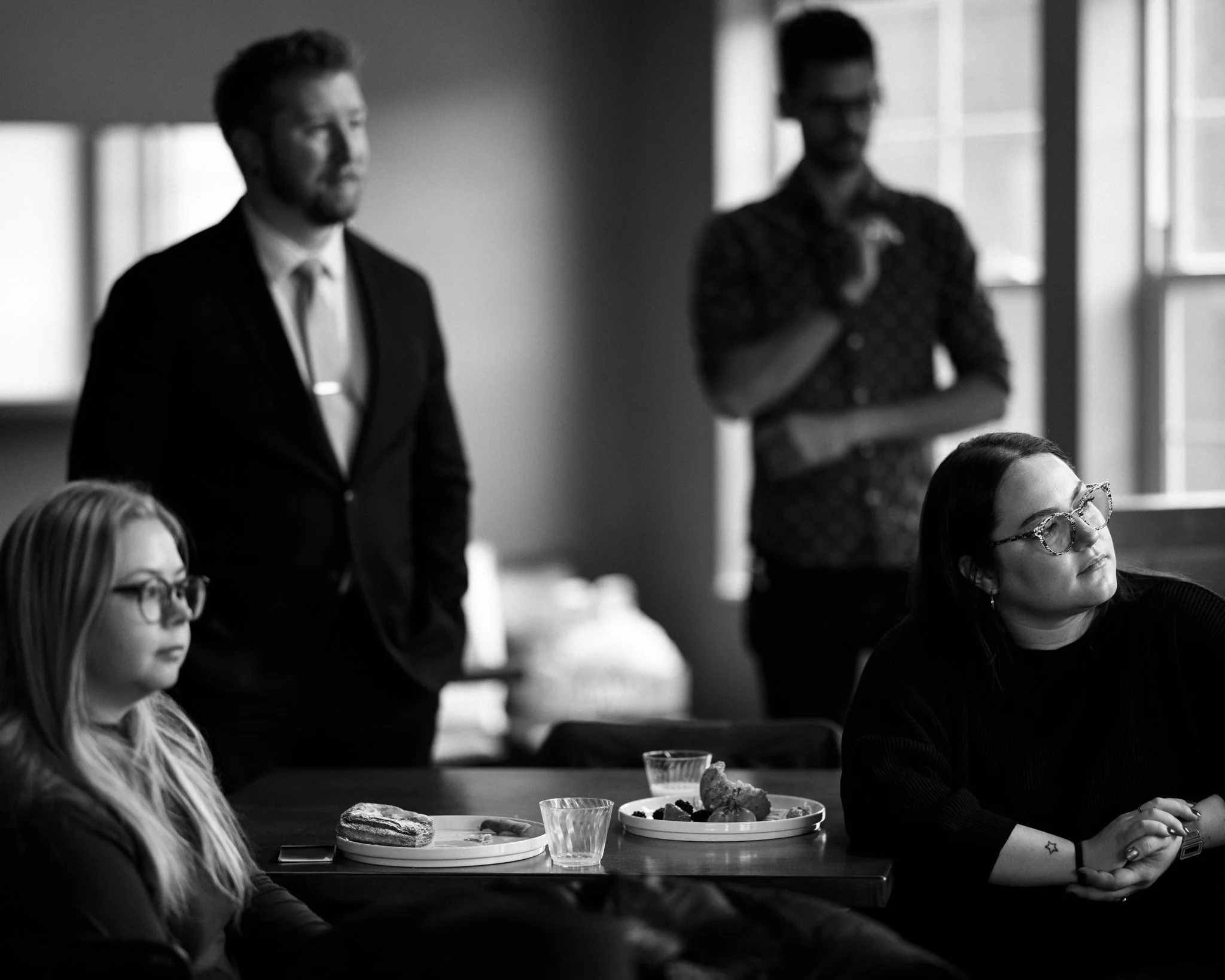
What’s notable is what didn’t happen. Returning participants didn’t disappear. Total attendance remained strong. The tone of the room—open, candid, lightly held—did not fracture under influx.
“Ours absorbed difference without losing shape. New people entered an existing rhythm rather than resetting it.”
Less stable gatherings often rely on “sameness” to maintain coherence. Ours absorbed difference without losing shape. New people entered an existing rhythm rather than resetting it. And that arterial flow of new faces, ideas, and experiences certainly enriched what was already in place.
We know now this is a seasonal change we should embrace and lean into. Which was in retrospect uplifting, because what we saw next was…
The Dip
August saw our fewest folks by far. New participation nearly vanished and many familiar faces were absent. We entered the dreaded pitch point of all programs–one which many don’t survive. We were in “the Dip.”
The temptation to mix things up or lean into marketing was fierce. The allure of advertising and targeted outreach almost crowded out the important truth.
Our gathering hadn’t disappeared, and neither had the needs of entrepreneurs and changemakers in our community. They were simply prioritizing family and the fleeting days of summer. Our job was not to alter what we had, merely to hold folks' seats until they were ready to return. And of course, many did.
The late-Summer/early-Fall season was a powerful reminder not to freak out or close up shop. Entrepreneurs are like a strange and wonderful breed of geese; they don’t fly south, but they do always come home.
What Winter Returns
By late September, participation began to rebound—not through announcement or reset, but through habit. People returned as they always have. As the days shortened, holidays notwithstanding (we met through those too), our room continued to fill.
And anyone who makes Northern Michigan their home knows why. Fall is when isolation creeps back in. Projects feel heavier. Burnout, which can hide in long daylight, becomes harder to ignore. People begin to carry more alone.
This is the moment many programs reveal their fragility. Fall often requires reintroduction, rebuilding, renewed justification. Energy has to be manufactured again. And that frankly always adds cost and stain on capacity.
Here, none of that happened. The gathering simply resumed.
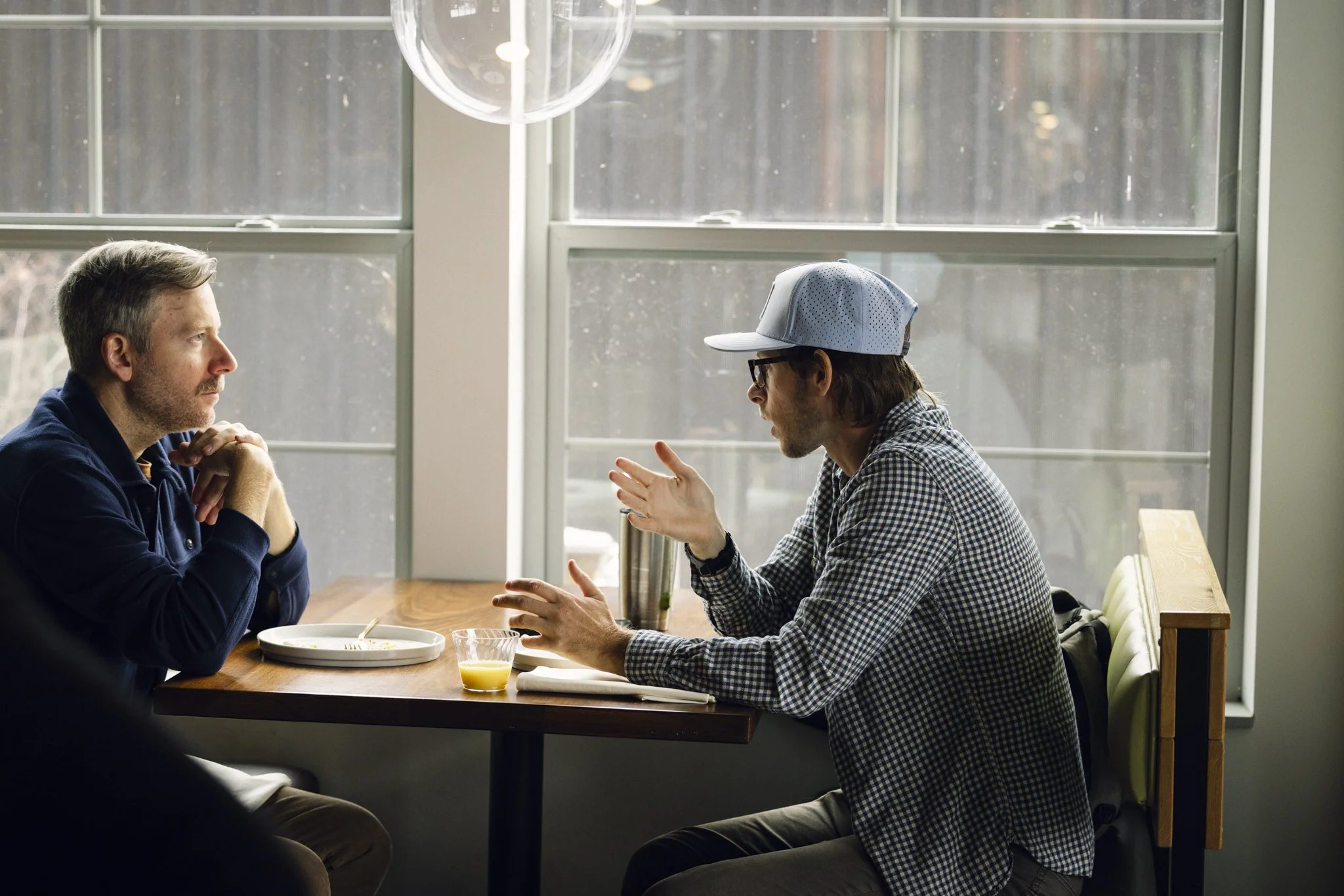
It had become part of the working fabric of the community—something people didn’t need to rediscover. They already knew where it was. More importantly, they knew what it offered: a place to think out loud, to be witnessed without being fixed, and to remember that whatever they were carrying did not have to be carried alone.
“It had become part of the working fabric of the community—something people didn’t need to rediscover. They already knew where it was.”
As we close out the year, we’ve had several well-attended holiday adjacent OOPs meetings. (Evidently, entrepreneurs can’t just clock out. Who knew.) In a, very, rare break from our trusted format, we’ve had some incredible conversations about where our local ecosystem is heading and what we want to build together in the future.
What This Kind of Work Produces
None of this proves success in a conventional sense. It doesn’t claim transformation, scale, or inevitability. It doesn’t suggest that everyone should attend, or that they should come every week, or even that attendance alone captures impact. And it certainly doesn’t suggest that OOPs is solely responsible for any of the success that rightly belongs to each entrepreneur.
What these rough numbers show instead is something subtler: it shows what becomes visible when leadership resists centering itself.
There’s a line (probably) from Lao Tzu that gets touted, but is often stripped of its harder implication:
Go to the people.
Live with them.
Learn from them.
Love them.
Start with what they know.
Build with what they have.
When the work is done,
the people will say:
We have done this ourselves.
That final line captures the risk.
A program, a gathering, built this way doesn’t generate obvious ownership. No one points to it as theirs. There are no forced testimonials about being “changed.” There are no grand metrics to tout. (Even if some numbers can help light the way.)
What it produces instead is something harder to measure: a habit of return that no longer requires explanation.
People come because a friend or a colleague told them to check it out. They stay because it’s useful. Because they have something to ask for or to share. They leave and tell others. And they come back.. And they come back. And they come back.
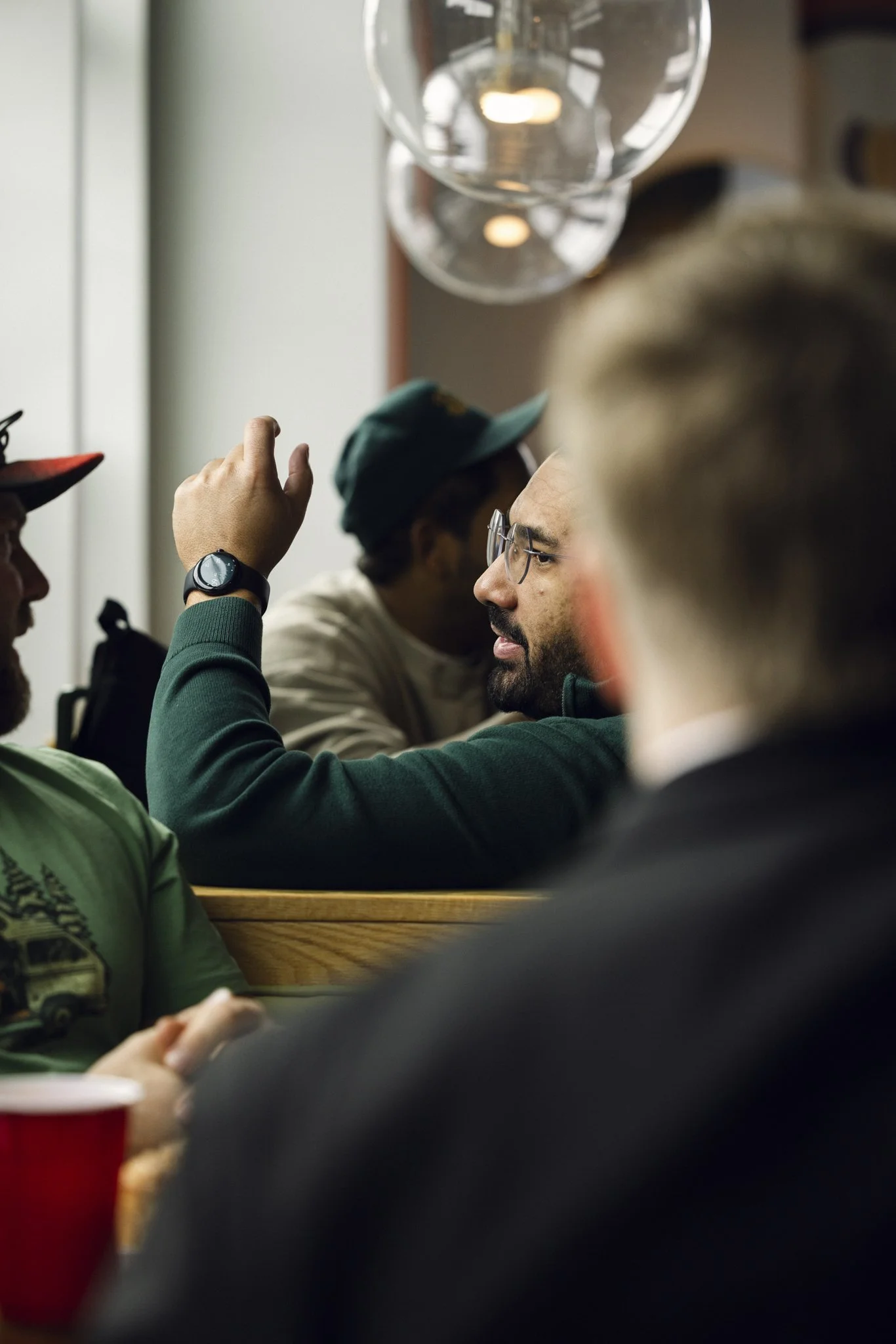
What Becomes Visible
Time to bring it all back ‘round to where we started.
We’ve all been, at one time or another, complicit in building and perpetuating systems that’re very good at producing point-in-time programs, but very bad at sustaining places.
After holding space for 819 conversations–and let’s be real, that number is a lot higher; nobody comes to OOPs and only talks to one person–what becomes visible isn’t momentum or growth. It’s pattern.
People don’t need constant novelty. They need continuity.
They don’t need to be led toward outcomes. They need space where they can discover their own outcomes together.
They don’t need a roadmap, they need to see those who are on the same journey.
“They don’t need a roadmap, they need to see those who are on the same journey.”
Despite what some may say, ecosystems have no center. That’s part of their defining character. But they do have edges. Or seams. Or whatever you want to call them. Spaces where folks can move in and out and between. And that’s what OOPs is. It’s a conversation, made up of a million little conversations, which connects and carries our entrepreneurial community forward.
And lest that sound too highfalutin, swing by on a Tuesday and gauge for yourself the seriousness of the conversation. While there is always a place at OOPs for the heavy and the heartfelt, more often than not, the first noise to greet you as you step in the door is laughter.
That’s worked for us all since 2023 and it’ll still be working for us in 2033. We’ll keep your seat warm.
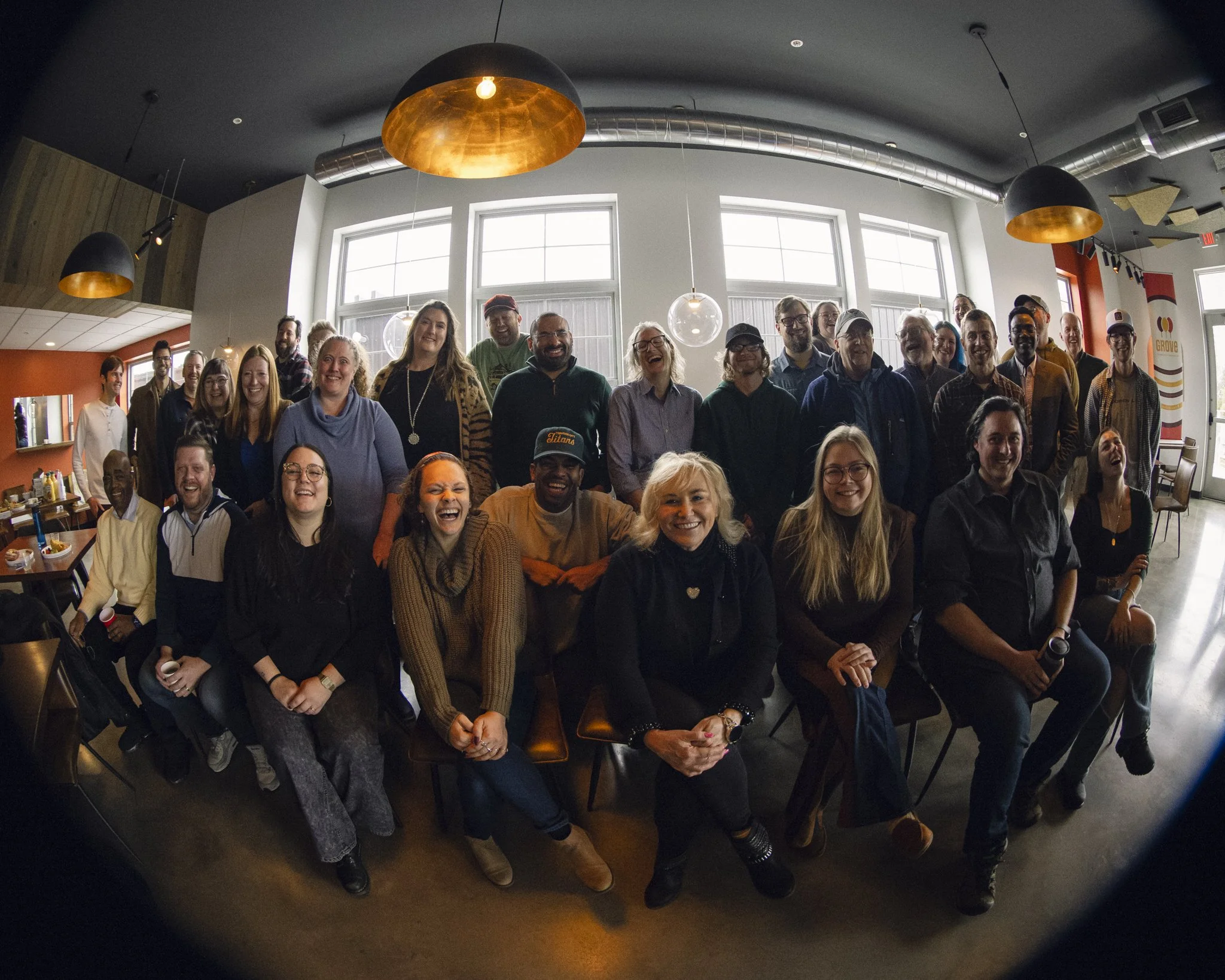
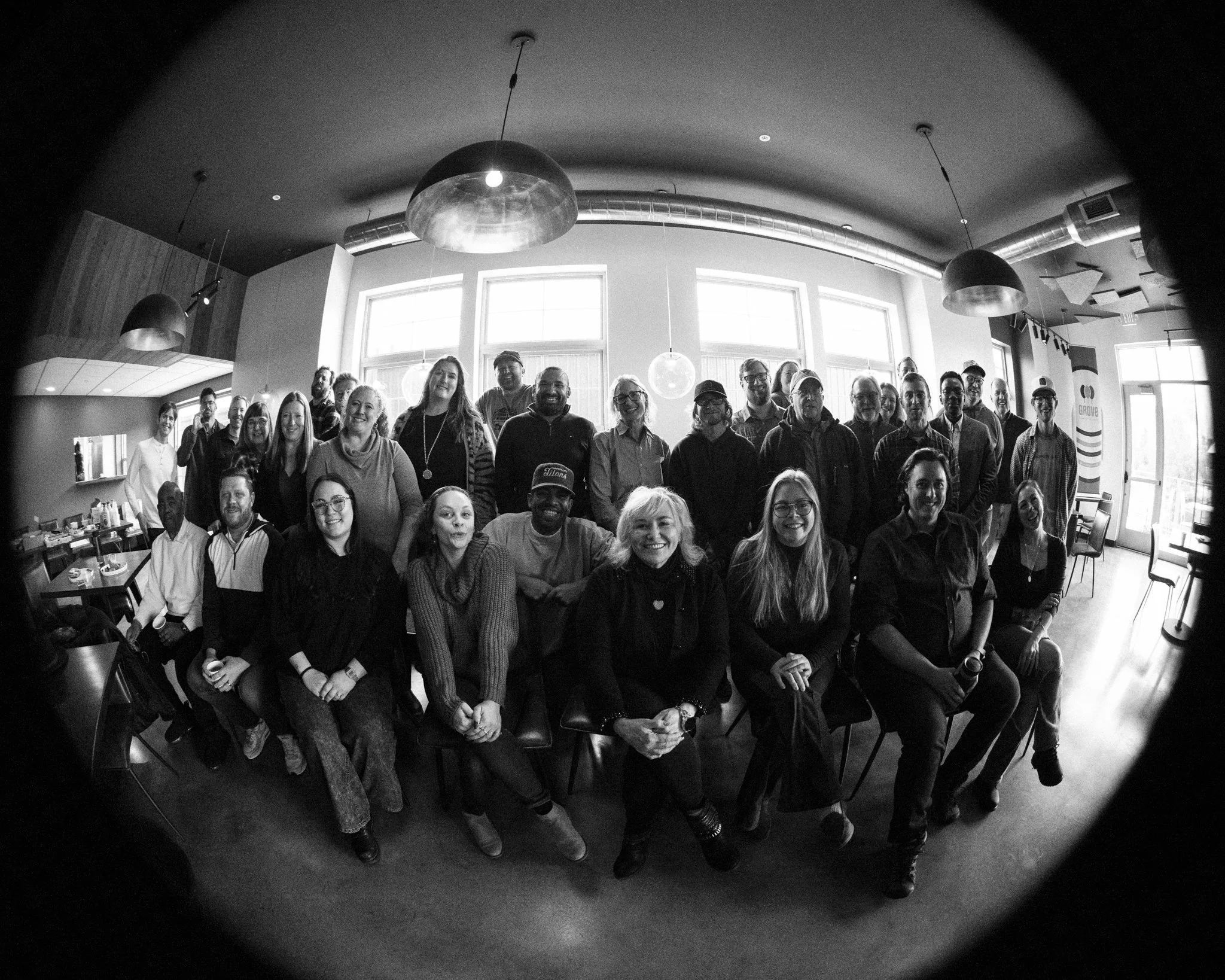
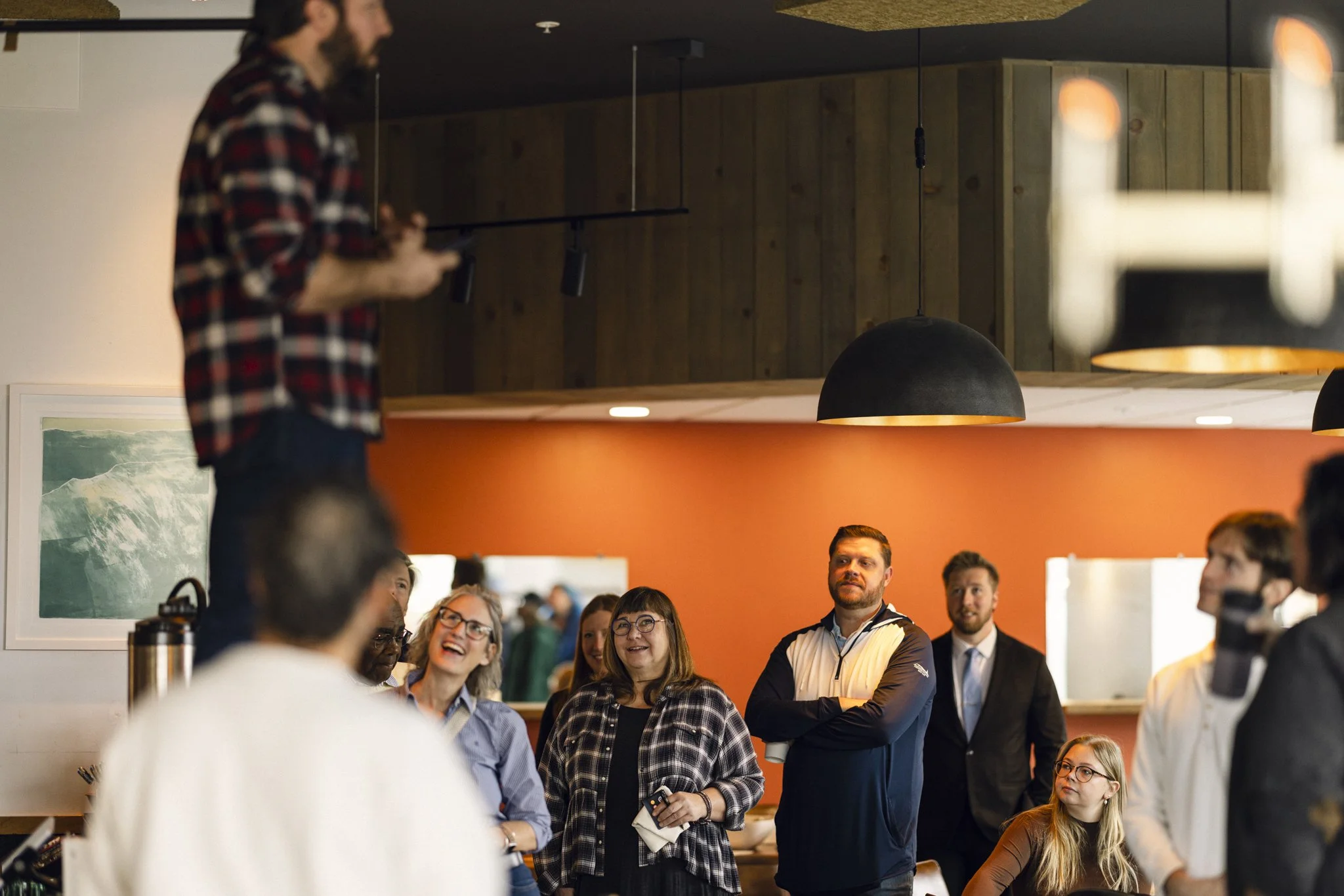
Huge thanks to local photorgrapher Tyler Franz for these amazing shots from our 150 OOPs celebration nearlier this year!
Check out his amazing work on Instagram @tyler_franz
We’re also deeply grateful to those supporters and sponsors who help kept OOPs going in ‘25, including the Michigan SBDC, Commongood Bakery, West Shore Bank, Higher Grounds, and a committed handful of quiet community of supporters. (You know who you are, and so do we. Thanks for all you do!)